One of the most historically collectible, highest quality, most accurate pistols ever developed. Some have called this the finest military pistol ever produced. What a find.
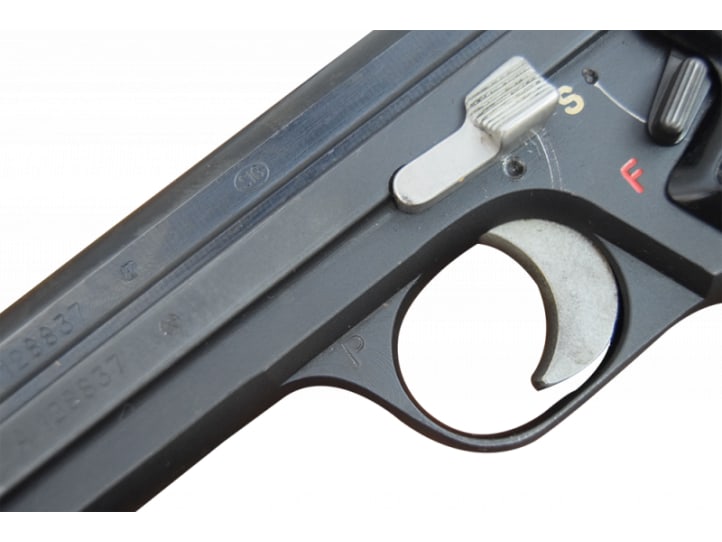
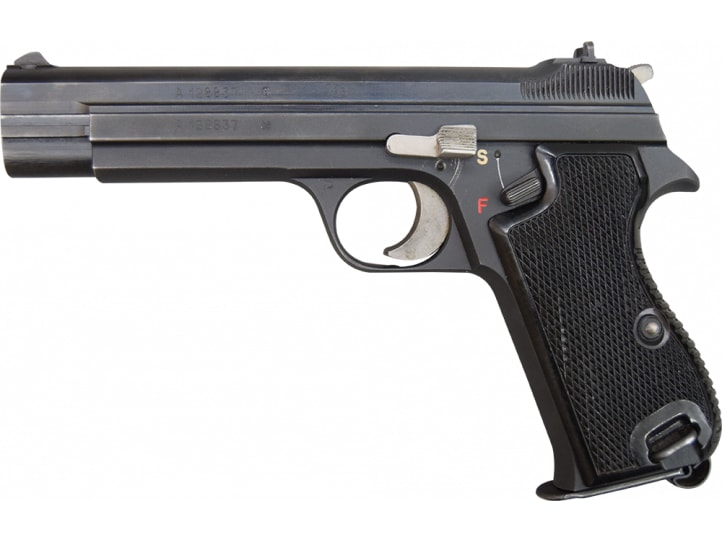
The SIG P210 is a single-action pistol, with a magazine capacity of eight rounds of 9mm. It is a licensed development from French-Swiss designer Charles Gabriel Petter's Model 1935 pistol. The trigger is blocked due not only by the frame-mounted manual safety but also because of a magazine disconnector safety that blocks the trigger when the magazine is removed. It has a 120 mm high-quality barrel (150mm in the 210-5 variant), and the pistol is very durable and reliable. The slide and frame are machined from blocks of steel, which makes production rather costly compared to more recent pistol designs manufactured of pressings and welds.
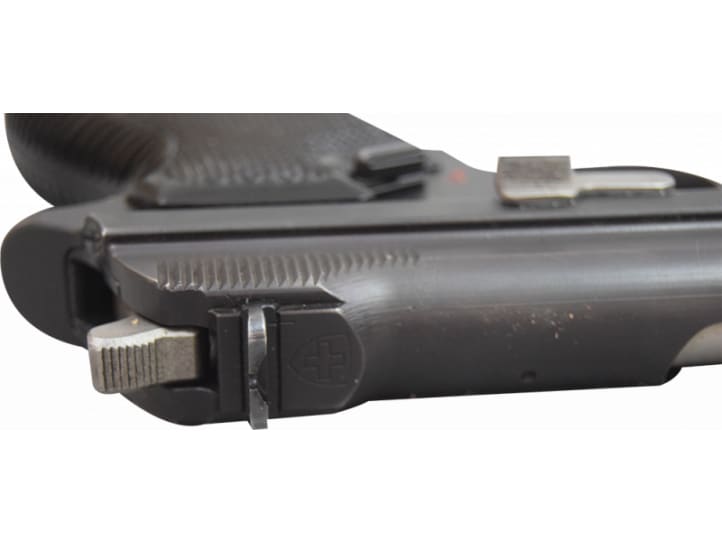
Its hammer action is built into a removable assembly for easy maintenance, after the fashion of the Tokarev TT-30 pistol. The P201's slide rides inside the frame rails, rather than outside, as seen in the traditional Browning pattern. The location of the slide rides feature mimics the frame-to-receiver interface of its predecessor in Swiss military service, the Luger pistol, allowing for a very tight fit between the slide, barrel, and frame without compromising reliability. This construction feature contributes to the unusually high accuracy for which the SIG P210 is known. These pistols initially shipped from the Swiss factory with a 50-meter (54.7 yds) test target typically showing a group of five to ten shots in a cluster under 5 cm (2 in) in diameter.
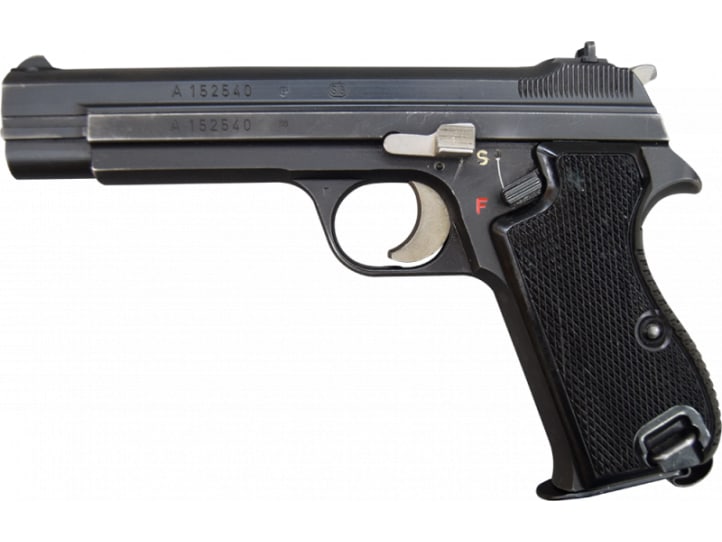
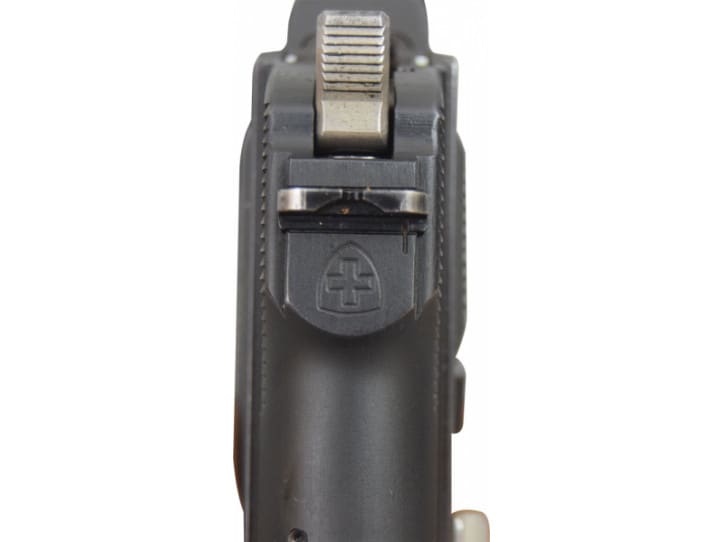
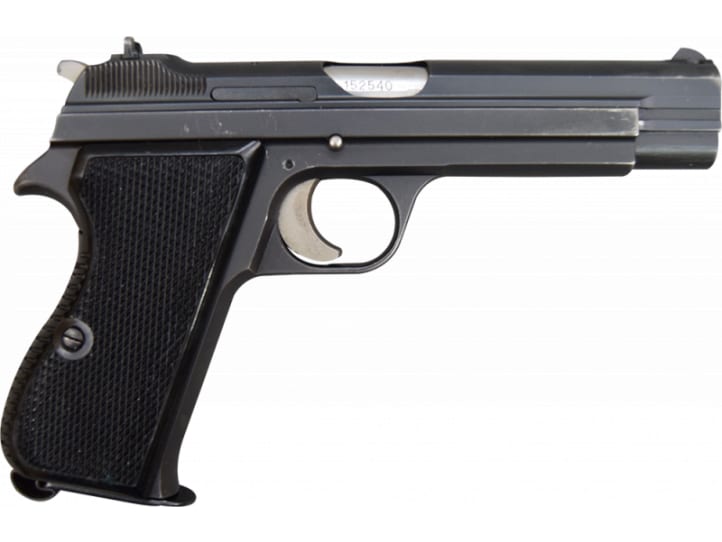
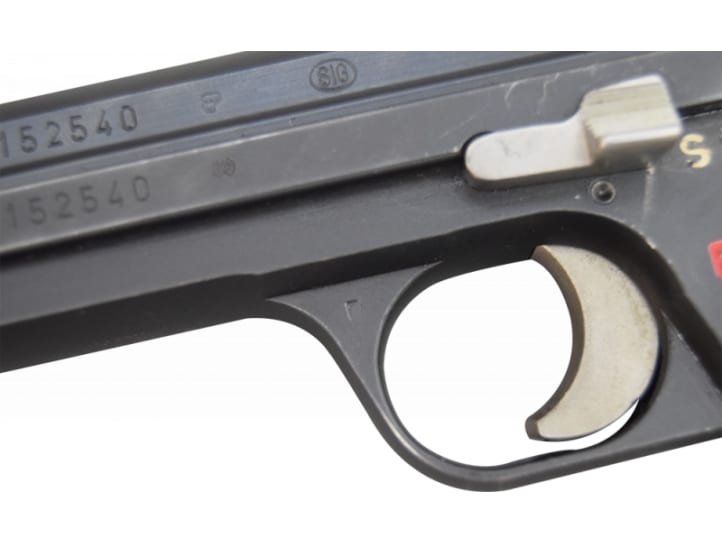
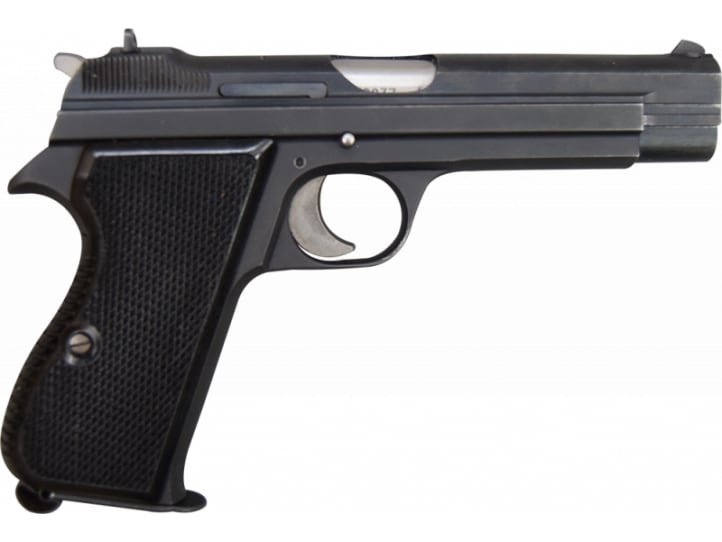
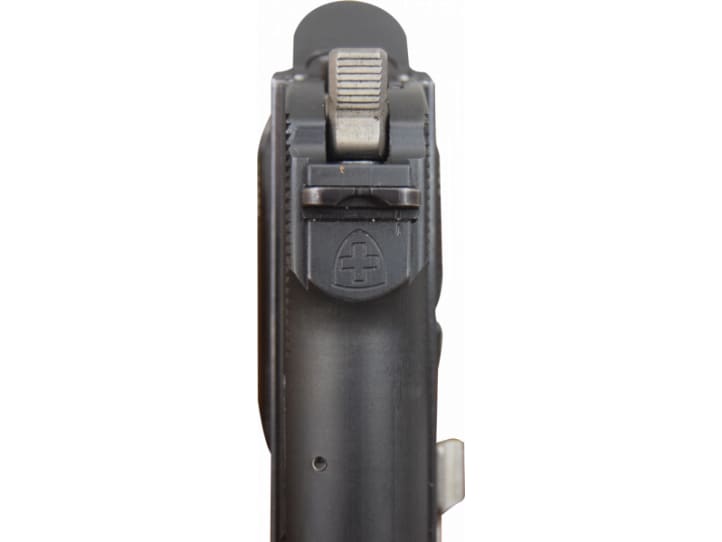
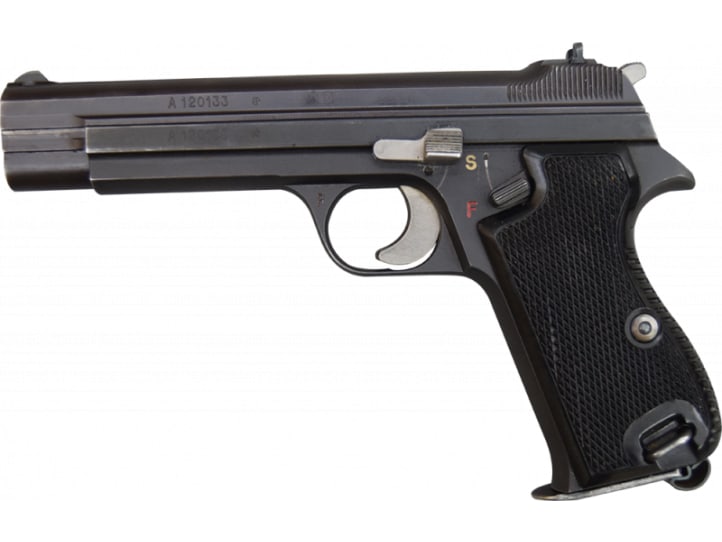
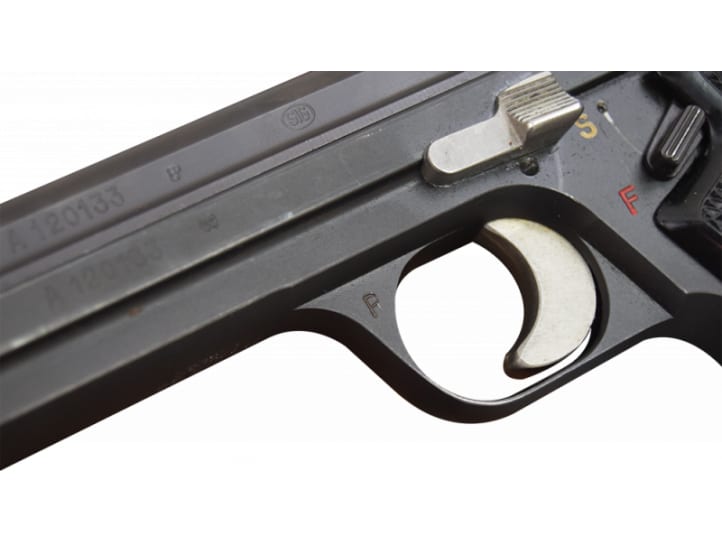
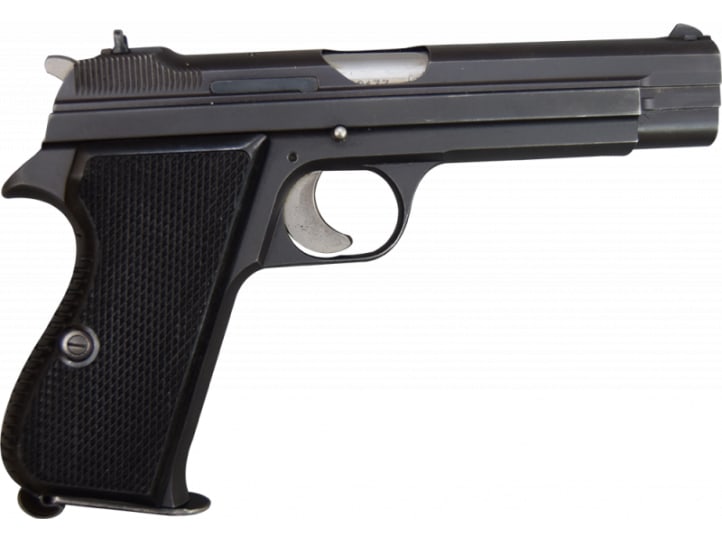
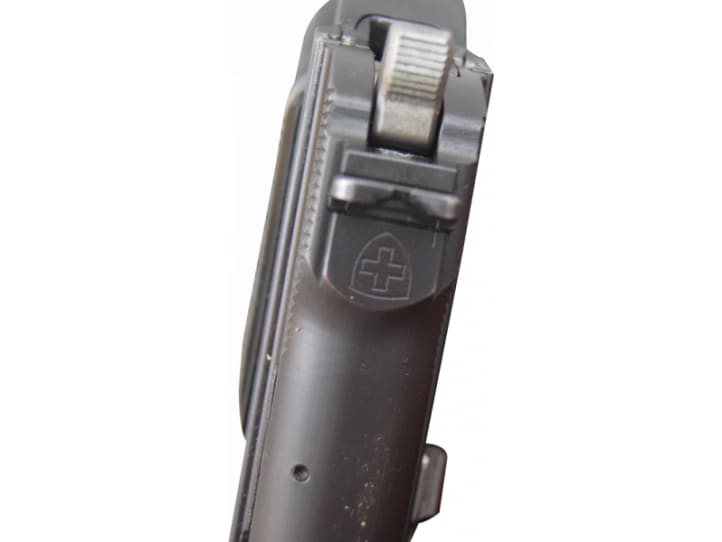
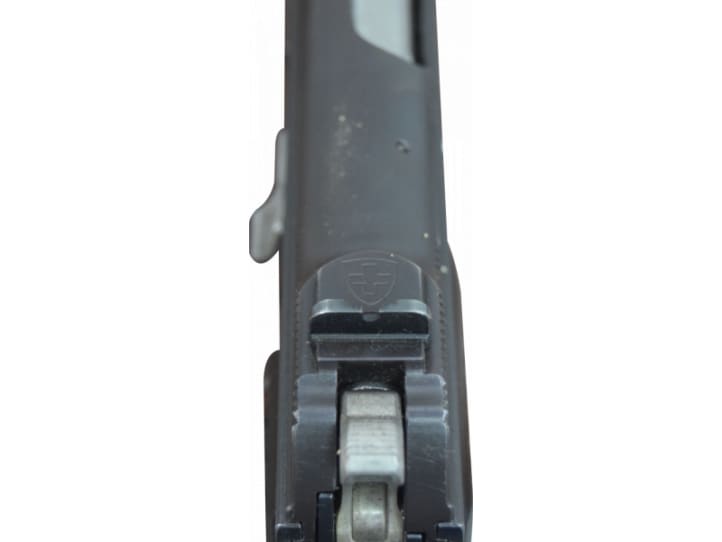
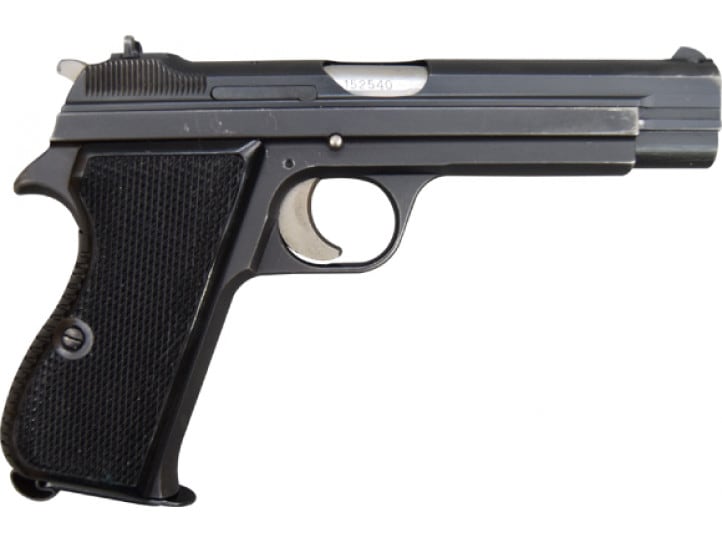
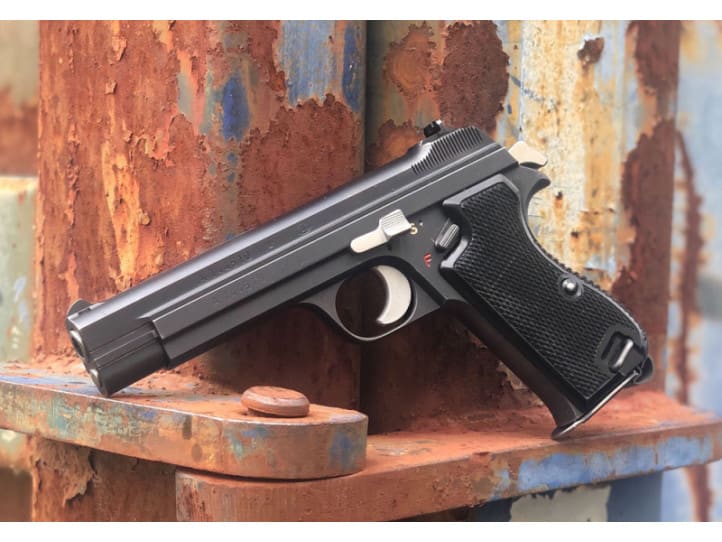
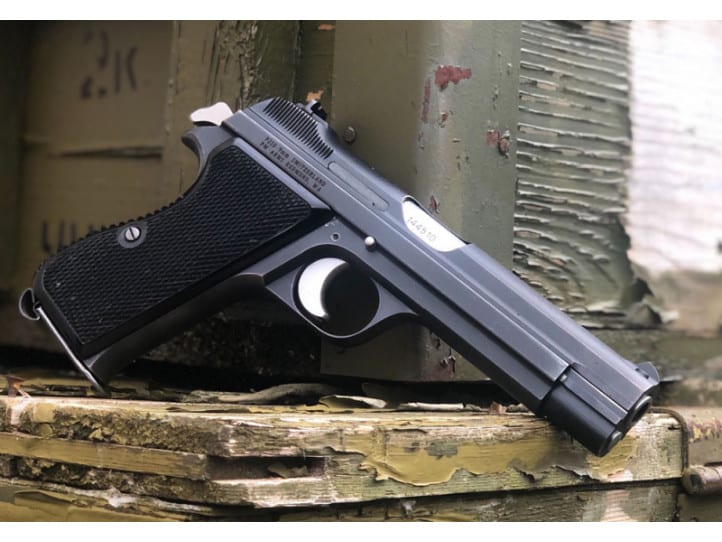
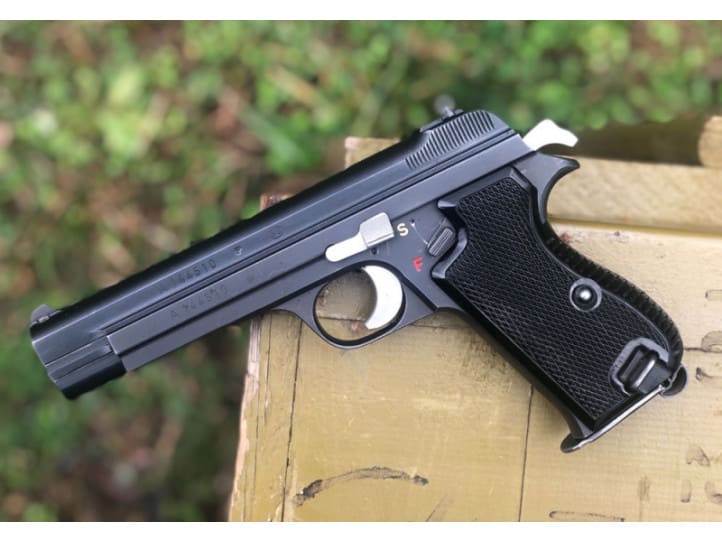
These particular pistols are the Sig-210-2 variation, the most common Swiss army version chambered in 9 mm Luger, with plastic grips, fixed sights, and a bead blasted high luster blued finish.
The SIG 210, aka the M49 or sometimes referred to as the P49, was a magnificent pistol, but too expensive to produce for a modern military sidearm. In the 1960s, the Swiss military began looking for a new service sidearm that would be a bit less costly, and SIG developed the 220 in response, which would ultimately be adopted as the P75.























 Loading...